Folk Hero Review – Pixel Rogue-like That Doesn’t Quite Hit the Right Note
This one time, at band camp...
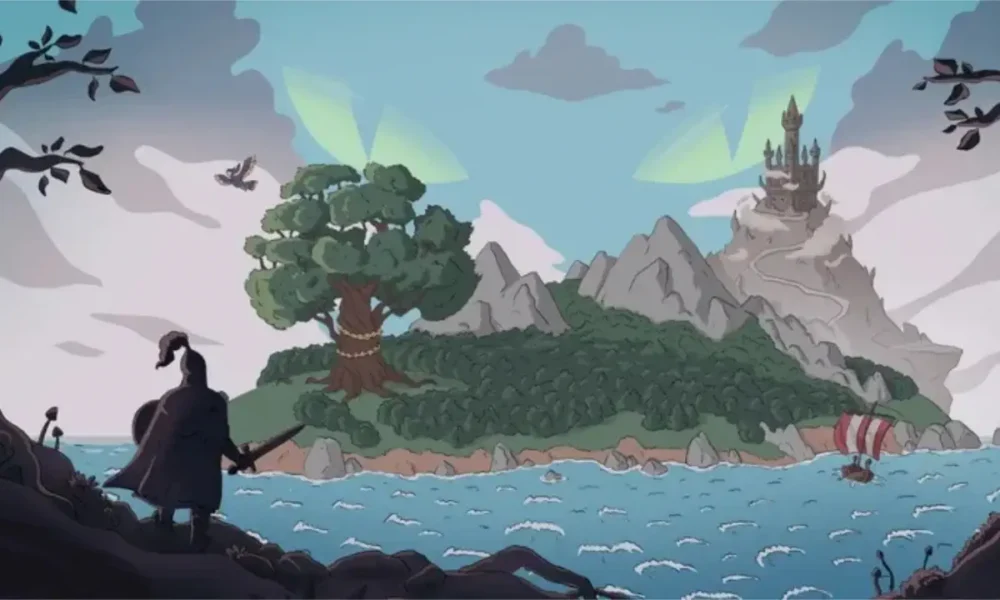
Put the banjo back: Folk Hero isn’t a spiritual successor to the days of DragonForce, played through numb, bleeding fingertips on now redundant plastic toys. Instead, it’s a low-key pixel art rogue-like adventure published by Smart Space Solutions.
A somewhat familiar setting, you arrive on a rowing boat at the shore, which serves as your hub, your respawn point, your place of tinkering. Without much in the way of options, the first thing is to get back on the boat and start a run.
First lie. The first thing to do was to change the control setup. It did not feel right at all, but clearly fixable. Another way of looking at it is setting invert to on or off when you’re playing a flight-based game. For some, it’s a faux pas – that’s what the controls were like for me.
Paragraph wasted, the level design for Folk Hero is a quick highlight. Instead of scrolling paths, it follows an old-school RPG approach of ‘rooms’, with multiple routes to be explored, with a little mini-map to remind you where you once saw a pebble.
Friend or Foe? Speak!
Exploration plays a part, not just because that’s how you should play games that rely on levelling up and power-ups, but because it’s quite hard to decipher what the movable parts are; what should you interact with, and what should you try to steal? Are there any banjos?
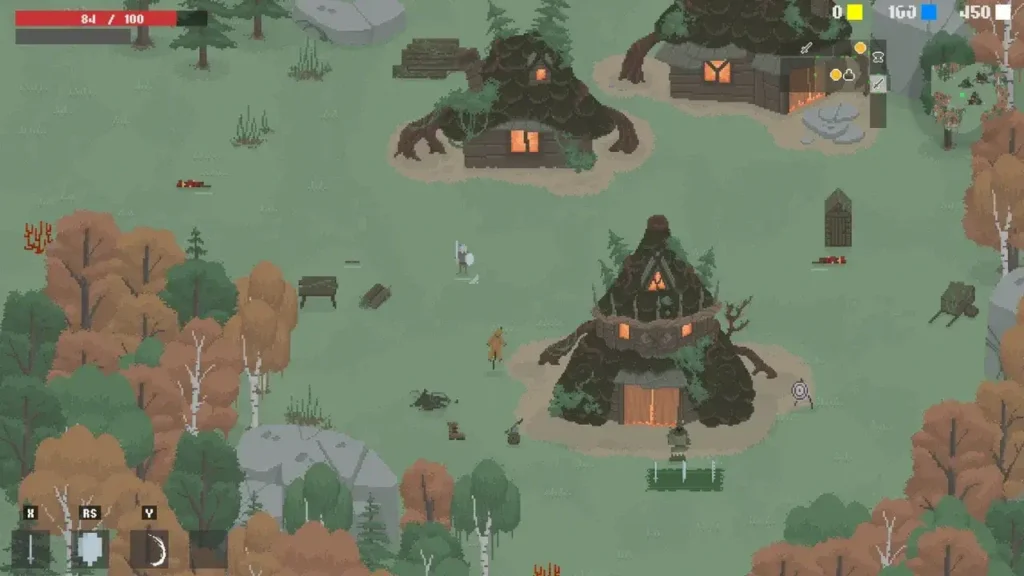
This would prove a problem if we had Skyrim patrols, as I’d be attacked on sight for attacking all the locals. Not on purpose, mind you, but because sometimes the only immediate difference between a neutral and an enemy is that the latter will rush you. The bosses are crystal clear, however.
Swinging your sword or hurling abuse at the locals won’t actually hurt, but a couple of times, I misunderstood that the folks passively standing by some huts would then shoot arrows at me, or that Gandalf-looking fellow wasn’t intending to hurt me, but sell me a skill.
Perhaps you like that aesthetic, as if playing a Sierra version of a rogue-like. In open spaces, it looks good, but where there are a few more immovable objects with enemies rushing out of nowhere, or rain or arrows on my bonce.
You’re Blocked
I’m very much a fan of rogue-likes, though what I look for is progression and variety reasonably early on, or some carrot dangling that indicates that you’re working towards something. Folk Hero, however, is a bit more of a grind.
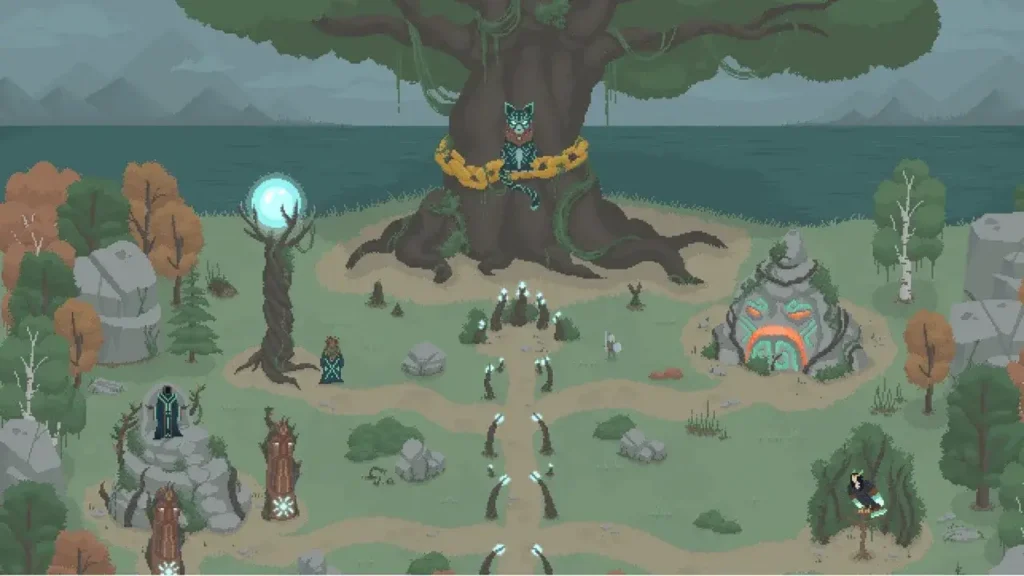
There are character classes as you’d expect, with a focus on survivability, melee combat and ranged attacks. In this scenario, melee was my preference as it added a bit more excitement than the others, though there’s skill involved due to the incoming attacks.
Blocking, my preference, felt restrictive, so in order to keep going and unlock more stuff, I’d be running around the screen, or even skipping an area in fear of an early exit. Naturally, the longer you survive, the better things are.
In Folk Hero’s case, it’s being able to unlock better weapons for immediate damage control, and artefacts that serve as your passives and allow for a bit more longevity. All a standard affair, but it just seems to take too long.
New Bells And Whistles Don’t Add To The Excitement
Folk Hero came out on the Switch over a year ago, but the Switch 2 version I played is more recent and features quality-of-life improvements and fixes. Apparently. As usual, being so forgiving and unassuming, I didn’t have any technical concerns; instead, it was the gameplay.
Again, I love rogue-likes, but I couldn’t get into it. Could it have been the controls? Perhaps it was the style of play? Maybe it was the real slow burn in getting anywhere, or getting excited about anything. And I’m a bit of a grinder (wait, what?), so I have a lot of patience.
That, I think, is the key point: Folk Hero didn’t excite me. It’s not bad; it’s not unplayable or overly easy or difficult, but in an over-populated genre of Surviors-likes and I’m more likely to get hooked on something like Jotunnslayer or an older favourite, The Crackpet Show.
Folk Hero is neither bad nor unplayable, but ultimately fails to captivate. The Switch 2 version includes improvements, but gameplay remains the challenge when there are so many alternatives.
PROS
- Nostalgic Sierra-like visuals and old-school RPG design
- Some cool boss interactions
- Good variety of weapons and artefacts (once unlocked)
CONS
- A real slog early on
- On the flip side, visuals are sometimes hard to decipher
- Lacking a hook to keep on playing
Retro fans will like the design, but modern tastes might prefer the faster dopamine release of a Survivors-like game.