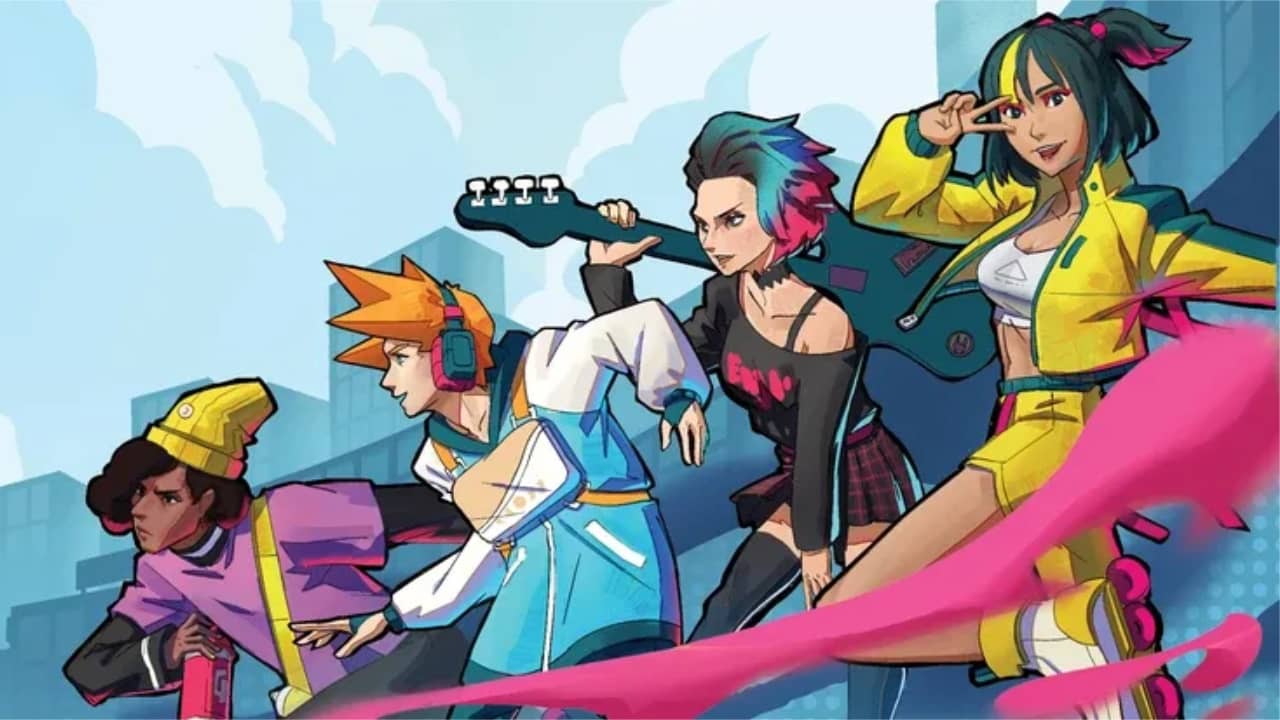
Bomb Rush Cyberfunk muscled in on the void Jet Set Radio left, and while many titles have been influenced by Sega’s highly stylised bunch of misfits, there’s always been plenty of wiggle room to introduce another IP. As long as it isn’t a rip-off/obvious clone. Canvas City has clearly been influenced by the legendary game (a biased statement – it’s one of my all-time favs), though read this: it’s a turn-based strategy instead.
The same premise is here: rival skater gangs, urban plight, cool remixed beats, and a cool cartoony vibe. Your Beat counterpart is MC, who is learning the ropes from Gum’s counterpart, Hop, though you get to play each of your crew eventually. Again, everything is turn-based and calculated rather than real-time Tony Hawk-like setpieces. The world environment is very much lived-in as Johnny Public goes about their business, while you scheme the most efficient moves to reach your goal: to graffiti.
I played Canvas City on my AYN Thor using the sticks for controls, and it worked great. You line up your actions using a grid-based system where any interactable object/obstacle will open up a command bar. For example, clicking on a rail would initiate a grind, though there are multiple actions unlocked, with the first being a traverse, which links into tricks.
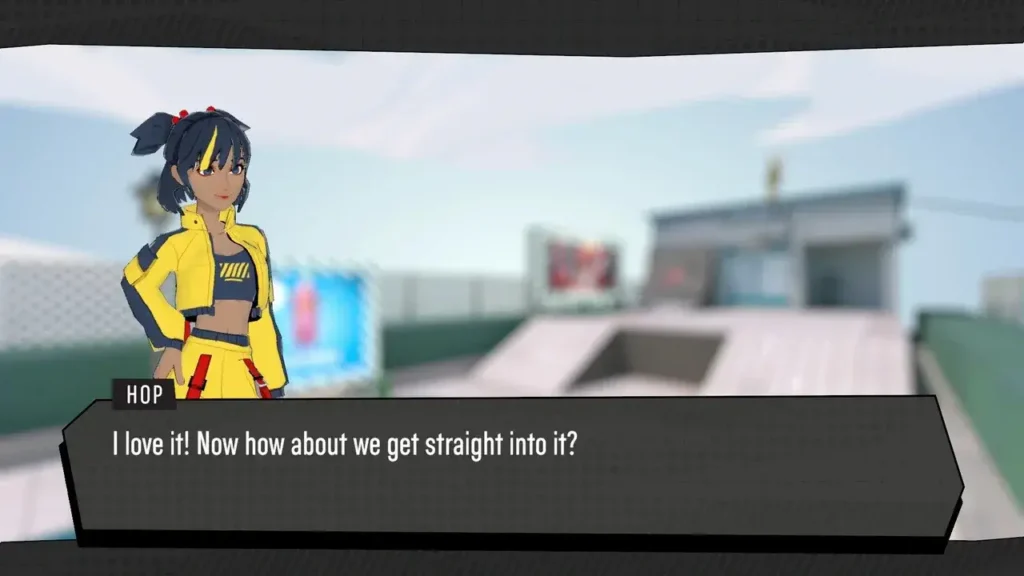
As with all turn-based games, action points play a vital part, as does SP for when you want to take out a rival. Accumulating SP comes from tagging, which, unlike our reference game, is automated. All you have to do is pass the tagging point, and it’ll be sprayed upon (ooer!) when you pass it and chain your actions together. Once you have boosted your SP, you can then brand a rival and give them a premium slap.
In no way has Disc 2 Games set out to create a spiritual successor to JSR as Team Reptile did, but it’s hard not to make the comparisons, and in this case, the biggest difference is the pace at which you move. Of course, you can’t just explore and skate about willy-nilly as you’re limited to your settings and objectives. As a result, Canvas City does lose its rhythm in that category as it’s slow and methodical. Equally, the tricks you initially perform are as good as the ones I could probably do in real life, which are roll and ollie. You can get better skills, but you have to invest a bit first, and we all know these gangs have limited patience.
Nevertheless, there are different ways to approach your objectives. I’d like to say I intentionally pulled off some gnarly moves, but it would be what you call a happy accident. In one setting, I traversed a ramp, brand a rival, jumped a gap, and instead of branding the next rival who was putty in my hands, I inadVERTently used an action point to go back, do another trick, skate back, then brand the enemy. In this scenario, I got classed as godlike (naturally), and all while this was going on, could pan the camera about as if I was some 90s camholder-wielding, baggy pants-wearing skating film auteur. All it needed was a fisheye lens.
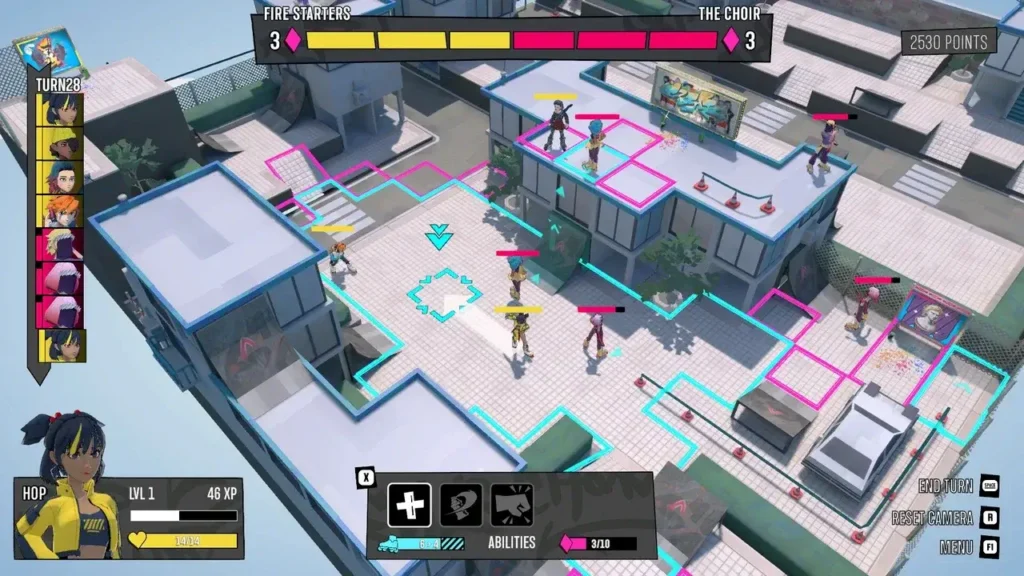
Note that this write-up of Canvas City is based on an early release, a.k.a. demo, that is available at the time of writing. In it, you can experience the first four levels after learning how to skate with your mates, and also how the process works of taking down your rivals, all the while keeping the paint flowing and keeping up your tags. In fact, the turn-based element grows on you, and while there aren’t that many death-defying stunts, it allows you enough time to plan your next move without having to focus on your balance. One to watch?