


The Posthumous Investigation Review: Not Everything Is Black And White
Make haste: there's been a murder...
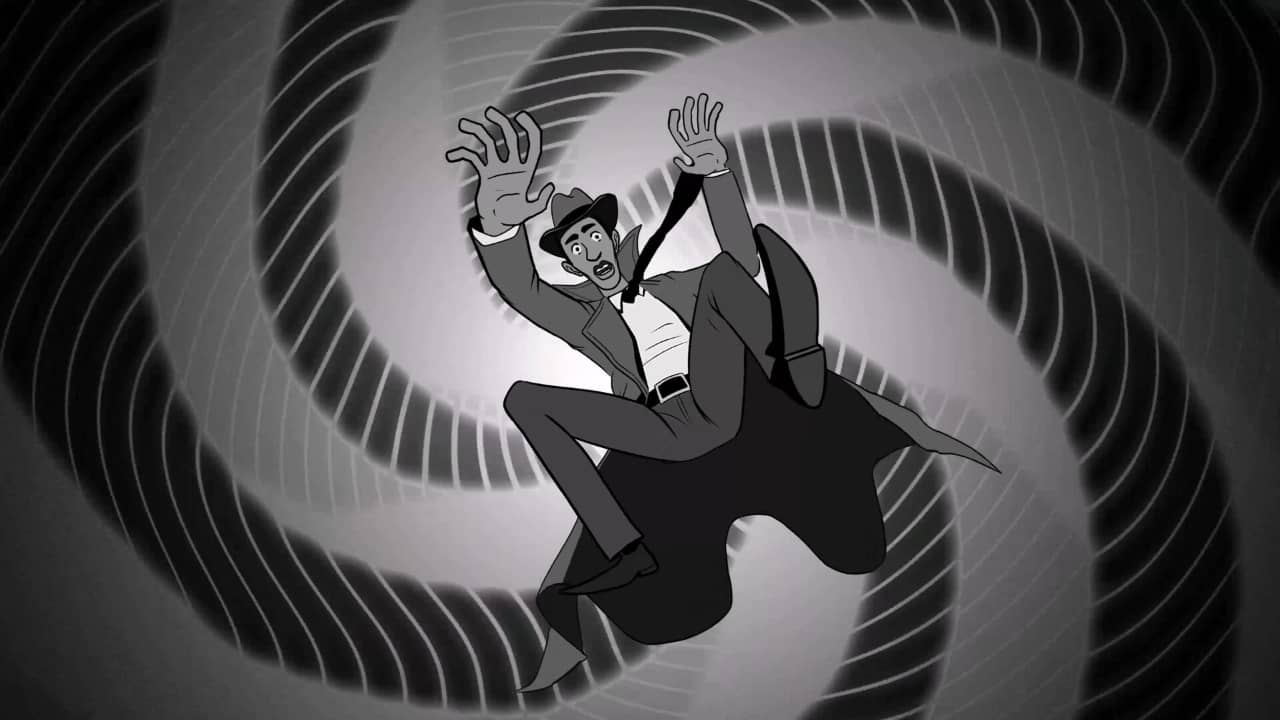
Wouldn’t it be great to relive the same day again and again until you’re happy with it? Maybe. But what if you were in that same loop and couldn’t exit until you’ve solved a murder, reaching its conclusion in less than 24 hours? That’s the premise of The Posthumous Investigation – a narrative-driven, time-travelling noir set in 1937’s Rio de Janeiro, where only you and the victim are aware of what’s taking place.
You play as the detective who receives a letter from Brás Cubas declaring his death and instructing you to find out who did it. This isn’t a joke; he’s genuinely dead, but had the foresight to write a letter enticing you to take on the task. Like any P.I., you’re hardly cherry picking the clients, wallowing in poverty, though at least you’re not on the bottle. Upon leaving your office, you encounter the murder scene and are left to make strides in trying to reverse engineer what has happened.
Cubas’ body is found within an alleyway, and your first task is to gain access. Entering dialogue with folk in The Posthumous Investigation has a point and click charm to it in that they may hint at a back-scratching of some sort. You then need to go find this item, or not, and all while on the clock. That’s not to indicate that you’ll be billing the Cubas estate with your fee, and instead the very literal passing of time. As you walk, the clock will tick, as well as when you select specific dialogues or present evidence to suspects. Time is certainly of the essence, as once it reaches midnight, the day resets.
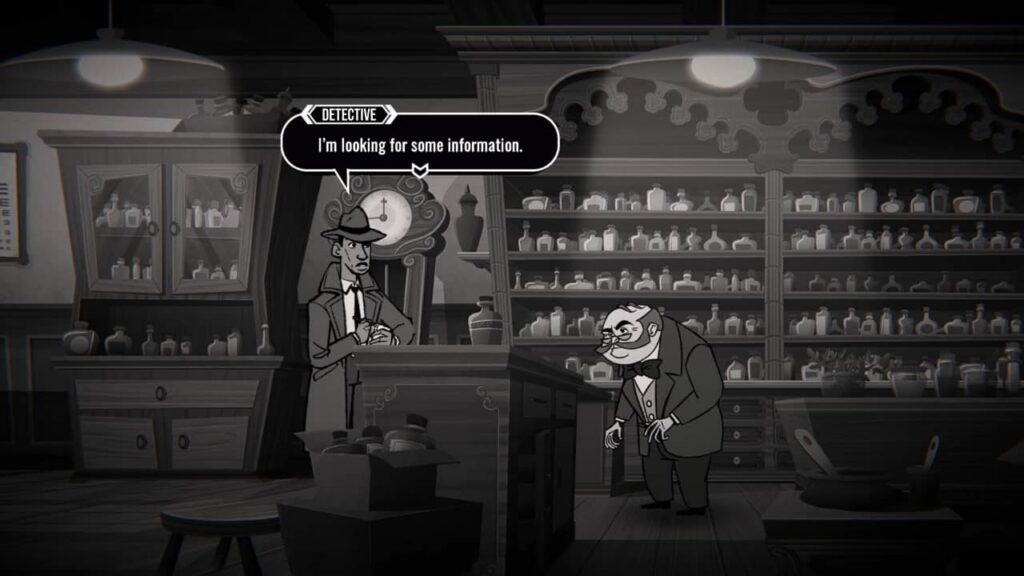
This might sound frustrating, especially when you’re making progress with a case. Fortunately, you retain all that knowledge and carry it through the next day. Well, you know what I mean. Clues remain in your inventory, though physical items do not, so there are occasions where you stumble upon a usable item that will disappear when the loop restarts. Honestly, this isn’t frustrating at all, mostly because you maintain that progress, because you learn the patterns where everybody is at each hour of the day, but most interestingly, you have a confidant in the deceased.
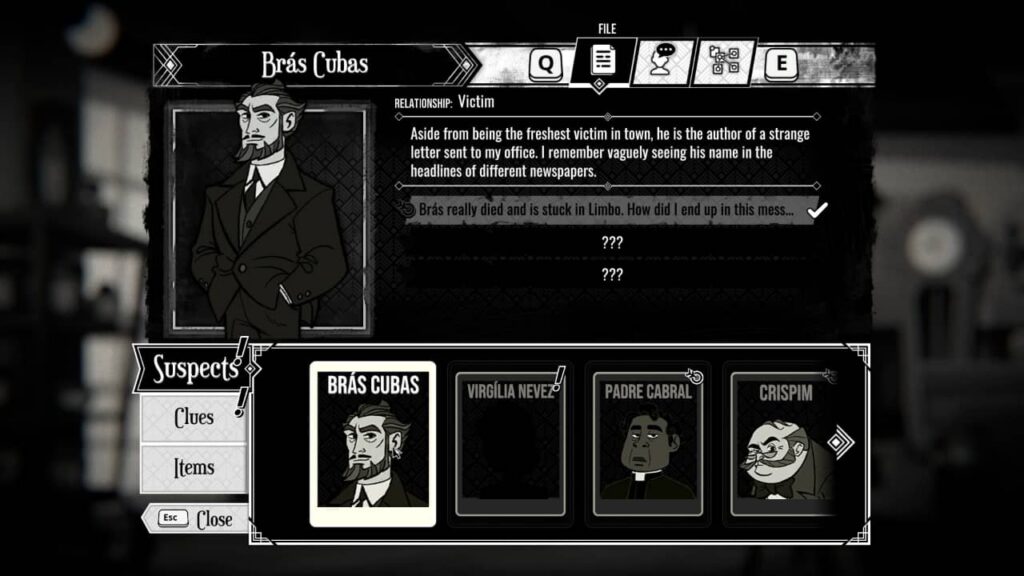
I won’t spend much time here in limbo, but Brás Cubas will check in with you after each day and discuss the case. This might mean getting a broader picture of where you should focus your time on the next run, or if completely clueless, he’ll give you a hint. You have the option to leave the room at that point and start your day. This is one of the highlights of The Posthumous Investigation, as you can explore as you please and aren’t immediately locked in. Naturally, everyone is going about their day in the same way, so you’ll learn those windows of opportunity and where to be at the right time. Then, just as you’ve figured them all out, a new area. unlocks.
Another highlight of Mother Gaia Studio’s game is how every character is interlinked. That chap you see walk off screen at a particular time of the day, whom you were unable to follow, now pops up somewhere else at a different time of day, meeting with another character. Hhmmm… suspicious… Progress a little further, and they appear once more, as do other seemingly peripheral characters. It’s so expertly crafted that you can essentially learn each person’s footsteps and learn of a handful of intriguing threads that might not necessarily provide you with the evidence you need, but make it all the more lived-in and engaging.
Having an inquisitive eye is key to being a detective, and the various failsafes in the game’s mechanics make it a straightforward but compelling experience. There are no deaths or penalties, and though you may have a few setbacks and repeated runs until you get it, The Posthumous Investigation wants you to see the story until the end without you having to hit another bottle of whisky. An intelligent and engaging whodunnit that makes you appreciate the various shades of grey – both figuratively and literally. Don’t make me repeat this review: go play the demo on Steam now, if not, take a punt and buy it.