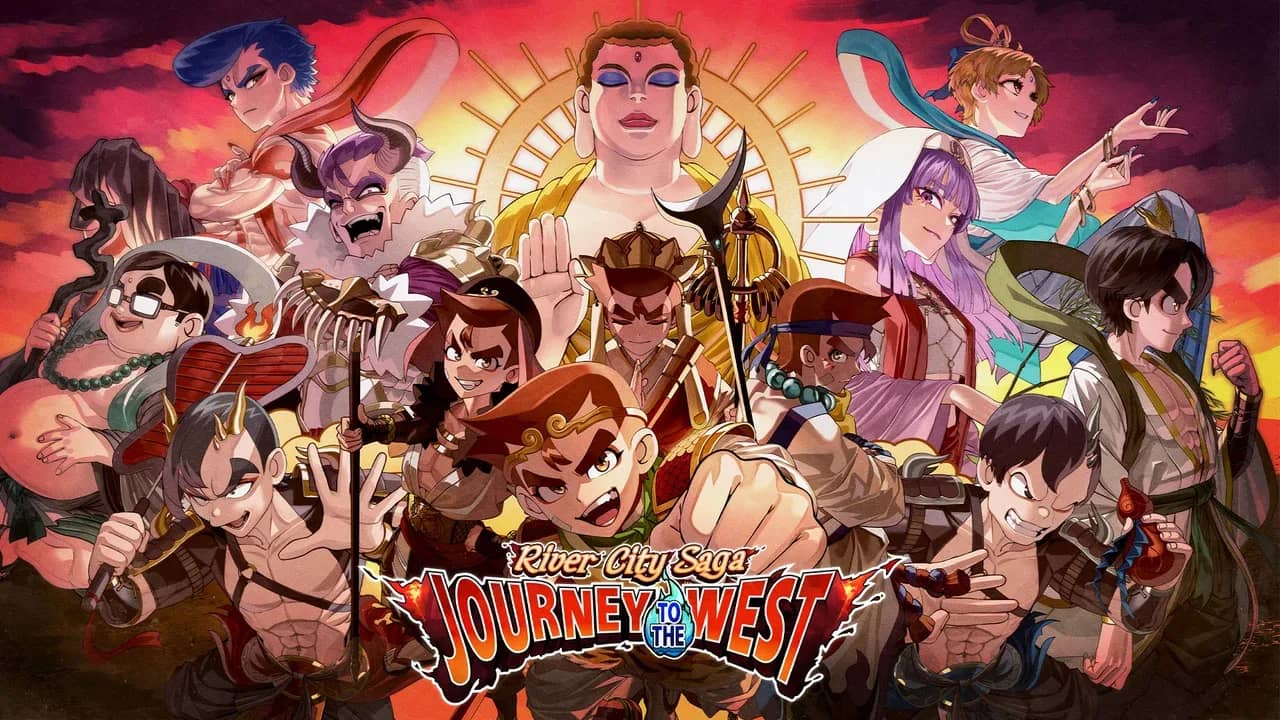
This almost began with River City Girls in the title, but River City Saga: Journey to the West features three lead male protagonists (finally, we’re represented in a beat ‘em up – it’s about time), and instead of high school girls, we’re now dabbling in Son Goku territory with the legendary Wukong. Again, totally unrepresented in video games.
If you’re familiar with the Kunio series, 99 Vidas, or know that a hero with monkey traits and flies on a cloud isn’t originally a Saiyan, then you’ll have an idea of what this is. Only, the tale isn’t the classic one, and without giving too much away, it’s some time after Wukong’s first mischievous adventure and is joining forces with his pals Bajie and Wujing to seek enlightenment from Buddha themselves, plus plenty of cameos from the Kunio universe.
I will be unprofessional now and say that I skimmed over the River City Saga: Journey to the West narrative a bit, as it was a bit madcap and uninteresting. I love narrative-driven tales, but I like my beat ‘em ups like Gran Turismo and just want to get on with it. However, while you can just ‘get on with it’ from some pleasant fisticuffs, this isn’t a side-scrolling affair and is more arena-based with rogue-lite elements. Emphasis on ‘lite’ as the features are light, plus there’s a very easy hack, meaning this isn’t such an ordeal.
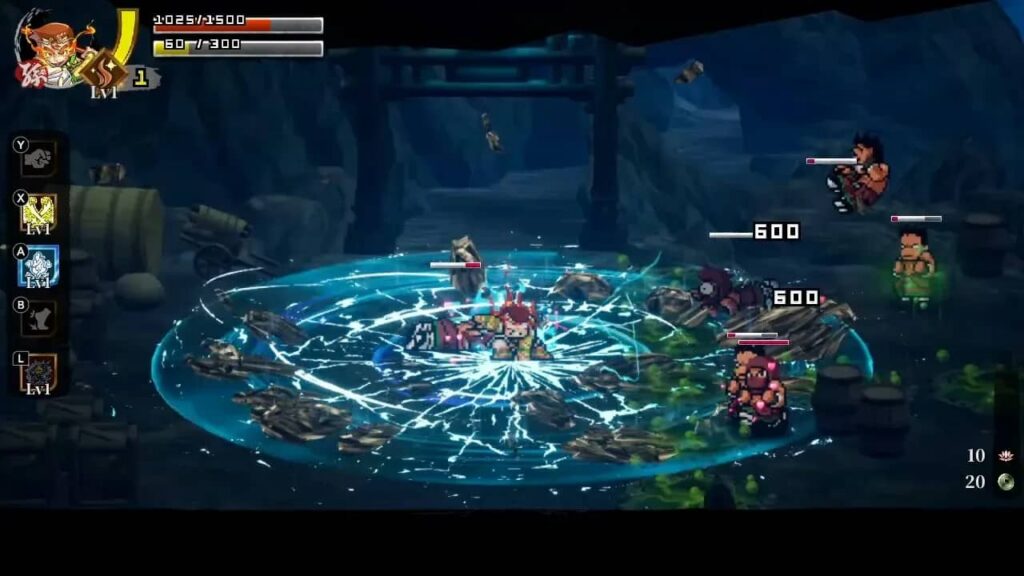
Beginning with Wukong, you enter an arena of nine stages, fighting a variety of footsoldiers, mini-bosses and a final one at the end – sometimes multiple. Combat is arcade-like and boasts basic attacks, spell-based attacks with charged options, an ultimate, plus a dash skill that can be incredibly useful. There are no complicated combos to learn, and the pace is great, though it is initially a little too easy. Bosses change that and are quite unfair in their approach, but that’s where our rogue-lite aspect kicks in.
Between each world (there are four in River City Saga: Journey to the West, I believe), or death, you return to a hub where you can reap rewards for completing challenges, beating bosses, and general discoveries. There’s also a merchant to buy new gear, which can be invested in permanent upgrades such as basic attacks, the time you remain on the ground when hit, and other stuff such as spell recovery and critical hits. In addition, you can learn transformations and perform specials by the bosses – as long as you beat them, as well as wear talismans that are awarded by the… gods? in the game.
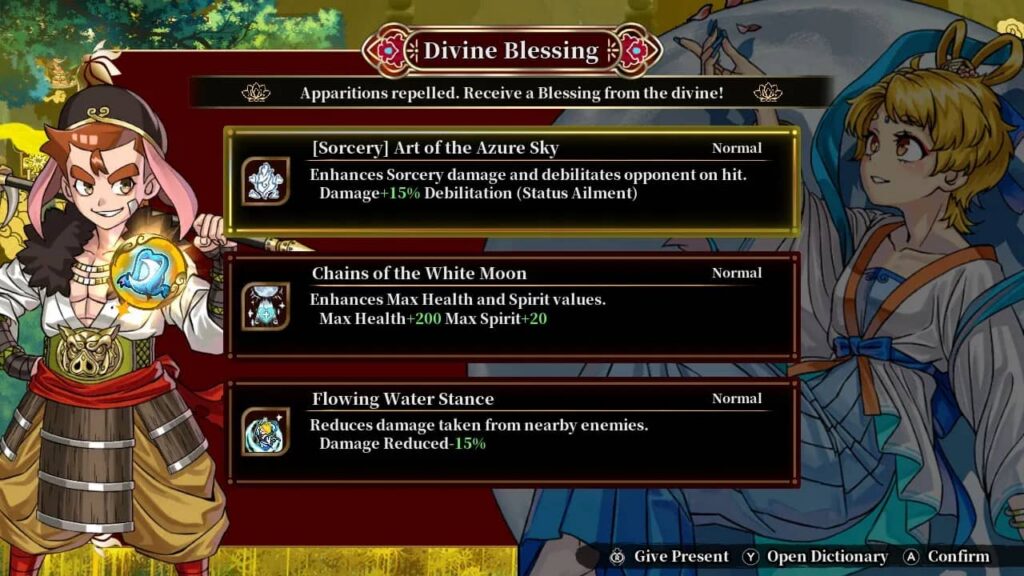
Yes, that rogue-lite aspect kicks in with deaths, and you can steadily build a stronger character; however, upon death, you have to restart the whole thing again. This is very frustrating, and while a short game, annoying to fight the same enemies. The differences with each run, however, is the blessings you receive from each of the gods (Misako and Kyoko are among them) can change up the way you play with elemental damage, such as shocks, and heavy-hitting ultimates that will clear an arena in one. It’s quite a bit of fun, and the three playable characters have different ways of playing.
Wukong is your Cody, Bajie is Haggar, and Wujing is Guy. With Wujing, though, they can perform ranged attacks and shred through the earlier stages with buttery finesse, though in later stages, their strength lets them down. And that’s where you count your blessings as they stack until death. River City Saga: Journey to the West is a fun game and moves at a decent pace, but having to restart the game upon a death (or swapping your character mid-way!) is annoying. Additionally, if you have the skills, upon completion, you’ll need to play through again for the ‘true ending’. Admittedly, this was worth it, and I found the ending quite amusing.
What lets River City Saga: Journey to the West down is a bit more towards the end, when traps and level design tend to pose more threats. Enemies will spam projectiles from a distance while you get stuck behind a rock or wait for flames or spikes to recede. Death is inevitable, but the carrot dangling on offer is the gamebreaker: you can add auto-assist. This was available to begin with, and I immediately declined. After getting about 80% or so through and dying due to a cheap trick, I tried it and found out I could max out my health and damage. This doesn’t make the game unplayable, but it makes it pointless at an early stage. I don’t mind this option here (as you can move the other way and make it hard), but this option should be there when you complete the game the first time. It’s too tempting early on and ruins the experience in my opinion. Sure, ‘don’t turn it on’, but when it’s a menu option that doesn’t require the Konami code, it’s a no-brainer.
Despite all that, I did enjoy my time with the game, and if you like anything like 99 Vidas but with a bit of a rogue-lite aspect and a game of chance when it comes to power-ups, this would be worth a look. Just don’t add auto-assist until your first playthrough.