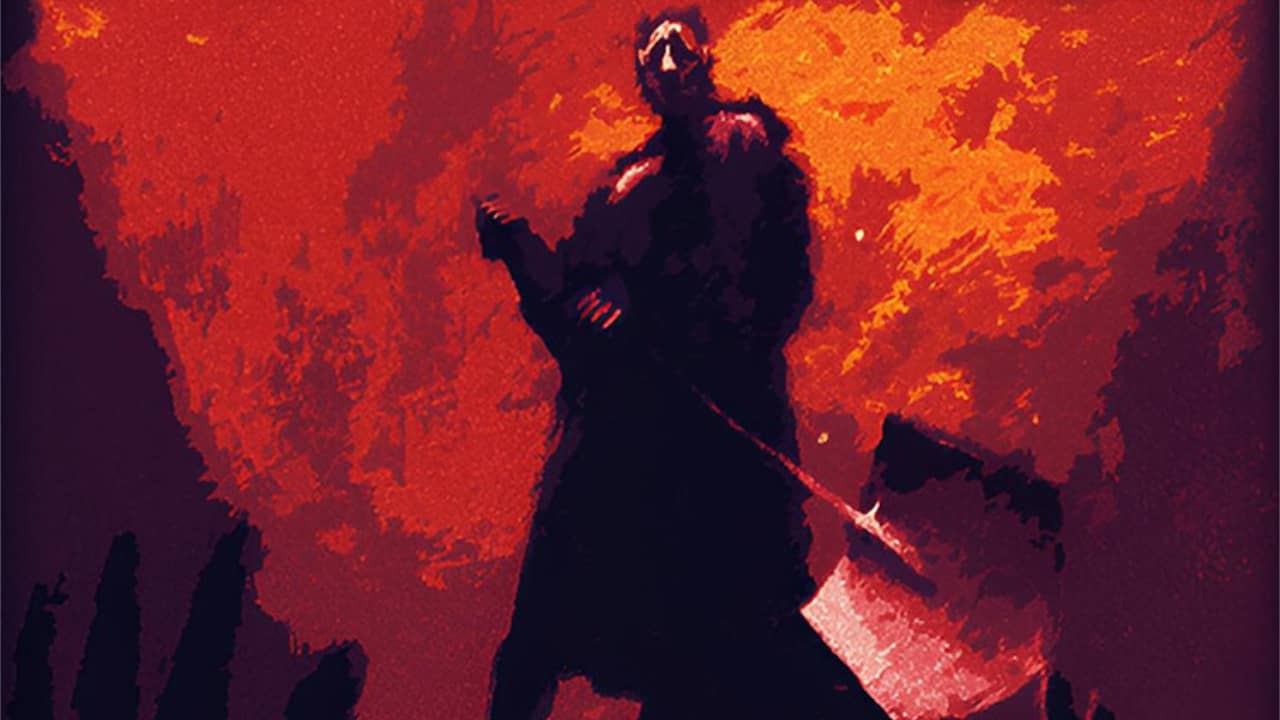
The Dark Eye, or now Edgar Allan Poe’s Interactive Horror: 1995 Edition, due to a popular series using the same name, despite this retro title from the mid-90s being based on stories by Edgar Allan Poe, who created these way before the RPG… ok, breathe. This is only the introductory paragraph. It’s not going to be like this all the way through. Or is it?
On paper, this game should be placed on a pedestal – a shrine, as I personally find it so aesthetically and thematically pleasing, I could let out a little moan, fluid or superlatives on that alone. And, to really make me fall into a large puddle on the floor, it’s a point and click. Well, not a Sam & Max type affair, but one of those 90s first-person puzzle types like 7th Guest and whatnot. Ask your grandparents.
Unfortunately, despite having a disclaimer about the technical aspects of the game, having been meticulously refreshed for today’s audiences, it does fall on its face with frequent pauses, and minor crashes, and glitches. There’s only so much you can pass off as charm. Stylistically, it’s amazing. The stop-motion puppets are stunning, and the ambient sounds are wonderful. It feels like you’re interacting with a Brothers Quay production, or for the cooler kids, a Tool video. Paired with the unique tones of William S. Burroughs reciting poems (he of the Naked Lunch, among so much more), it is delightful.
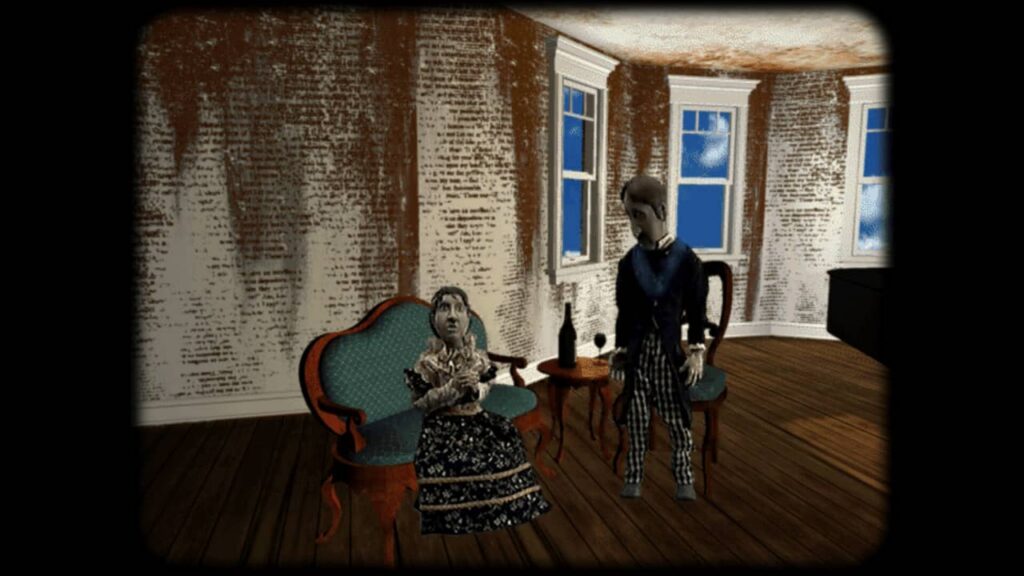
But, Edgar Allan Poe’s Interactive Horror: 1995 Edition doesn’t translate well for an audience in 2026, besides the retro fans not having to boot up their old 486. It’s quirky, unusual, and the blueprints of a walking simulator. Again, I can’t stress how beautifully grotesque this is, triggering all these synapses of genres that I love, the unknown, the weird, and how I am just too simply dumb with regards to poetry. For anyone expecting slap and tickle humour, a linear, cohesive experience? Well… After all, you have Burroughs narrating, what do you expect?
There’s not much clarity in what Edgar Allan Poe’s Interactive Horror: 1995 Edition is about besides beginning with a cousin visiting another cousin. You don’t ‘play’ just one protagonist, but switch between characters without warning or expectation besides a transition to indicate a passage of time, or some ambience of sorts to segue the two together. It’s Quantum Leap, directed by David Lynch, narrated by… well, William S Burroughs would probably be the best option. The latter narrates throughout, but as this is a restoration of the original, there’s no modernisation of hotspots or accessibility options such as subtitles.
Subtitles in Edgar Allan Poe’s Interactive Horror: 1995 Edition would be a godsend, as there were so many moments of distractions outside of the game out of my control that I missed things. Not that these nuances would indicate the next objective, but it’s all part of the… mise-en-scene. Without anyone to guide you or provide an overlay of what to do next, or a LucasArts inventory to combine everything together, it gets overwhelming. Not in the sense of the challenge, as there are no demands there, it’s just the expectations that you’ll click on the right thing at the right time.
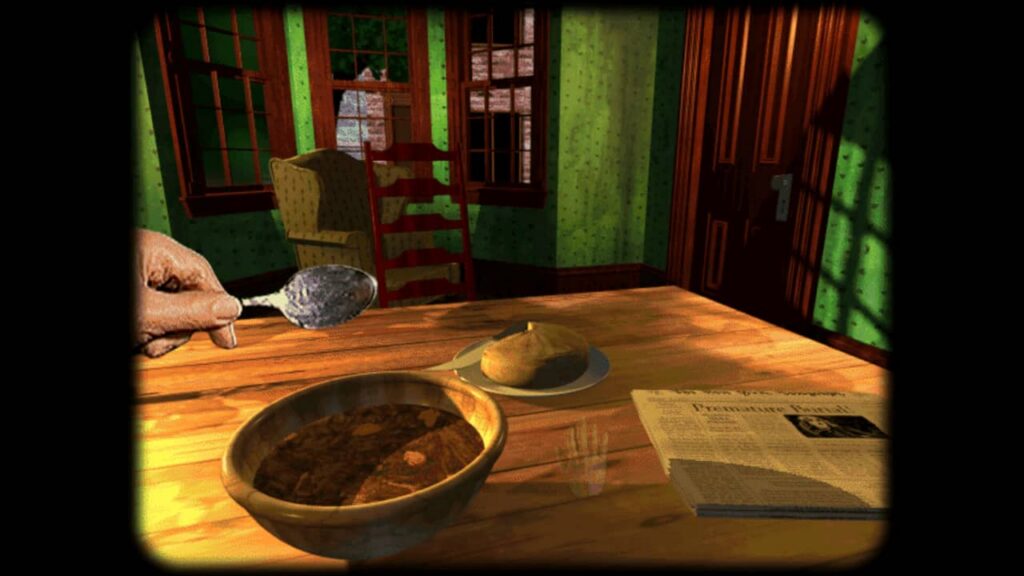
This is effectively a 3D visual novel and not a puzzle game. You’re clicking on objects or pausing at areas to reminisce, though these memories aren’t yours, so you don’t know what you’re supposed to be doing or looking at. The hand cursor is quite handy (hah!) as it’ll shift to an animation of what you could do next, such as turn left or right, caress a painting or hold a pen. There are also a lot of times when the hand will be translucent and rendered useless.
The best way to summarise the Edgar Allan Poe’s Interactive Horror: 1995 Edition experience is to think of a modern VR game where you don’t actively move but ‘teleport’ one scene at a time. There’s no fluidity, and instead, you need to be looking for any clues by staring at the cursor, or sometimes, standing still and waiting for the narrative to progress. Again, I can’t put enough emphasis on how brilliant the atmosphere is, and I am pretty vocal about my love for stop-motion and puppets mixed up in the medium. That’s not enough to warrant a restoration, though.
Perhaps this can be one of those Digital Eclipse collections to embrace gaming history, but without any additional features other than a Legacy mode to combat technical glitches, there are no DVD extras, commentaries, free plasticine to make your own stop-motion, or a signed print of Burroughs in his pants. If this were a short film, I’d love it. As a game, I wasn’t so much frustrated, just a little… bored? I was actively playing PC games when this launched, but as the internet wasn’t in households then, I never heard of this until YouTubers touched upon it, and then Edgar Allan Poe’s Interactive Horror: 1995 Edition released it in 2026.
I don’t have that nostalgic attachment, but 30 years on, I’m enamoured with the FMV stop-motion and concept. Regrettably, the minor technical issues and clumsy ‘Built for Windows 95’ vibe, made it as awkward as finding someone to dance with at the school disco. When you’re up and dancing and doing the moonwalk, it’s fantastic, but all the plodding in between and not knowing what to do? Not so appealing.