Assassin’s Creed: Valhalla PS5 Review: A Thor In England’s Side
More of the same thing, but with a Viking flair. Skål!
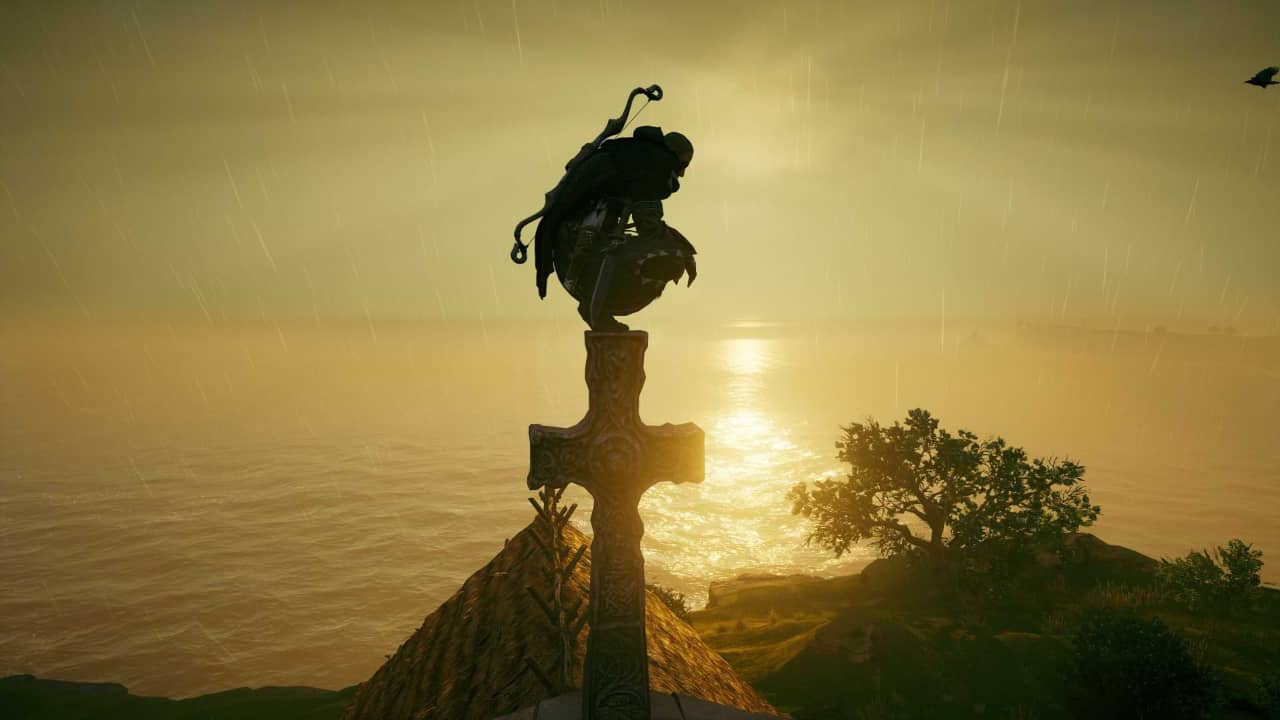
I bit the bullet, rather, took a bearded axe to the face and bought Assassin’s Creed: Valhalla over the holidays, and it’s officially my Christmas game of the year. Coincidentally, updating this in 2026, Assassin’s Creed: Shadows was my Christmas game at the end of 2025.
What does that mean? For the past five years or so, I end up playing a title to death due to some downtime, with titles such as Persona 5, Death Stranding and more being in the Hall of Fame.
This year, I had expected it to be Cyberpunk 2077, but I’ve already finished it. Granted, not 100%, but a satisfying conclusion to the story, maxed-out street cred and more. You can read the Cyberpunk 2077 review here.
A couple of years back, Assassin’s Creed: Odyssey was my Christmas game, and I smashed it over a couple of weeks. In just over a week, I’ve managed to finish the core story and missions in Assassin’s Creed: Valhalla, and this is my assessment.
It’s familiar territory once again as we enter the animus and play the role of a historic assassin from a beloved era. This time around, it’s the Viking period as it draws influence from the likes of Ragnar Lodbrok (whichever way you choose to spell it) to Norse mythology, such as Odin and Thor.
You play Eivor, who can be either a male or female character. After the joy it was to play Kassandra in AC: Odyssey, I opted to play the female version, but about three hours in, I switched to the male as I wanted a custom beard. Yeah, that’s shallow.
Interesting to note, you can swap back and forth from the menu whether you wish to play as a male or female, as it doesn’t impact the storyline like the siblings in the Greek saga. Regardless, you can woo male or female characters no matter, so if you’re in it for the romance, fear not, as there are no restrictions.
The gist of this story is about expansion. With King Harald unifying the Northmen and making battle-hardened warriors redundant, Eivor and his Raven clan head to England to meet up with the sons of Lodbrok; the goal is to set up shop and reap the rewards of the Anglo-Saxon land.
As Assassin’s Creed: Valhalla is set in the 9th century, the two opposing orders in the series are steadily finding their place in society; the Order of Ancients rearing its head once more. Without going too much in-depth to the story, revealing the plot, Eivor learns assassin traits like assassinations, leaps of faith and locating mystical artefacts.
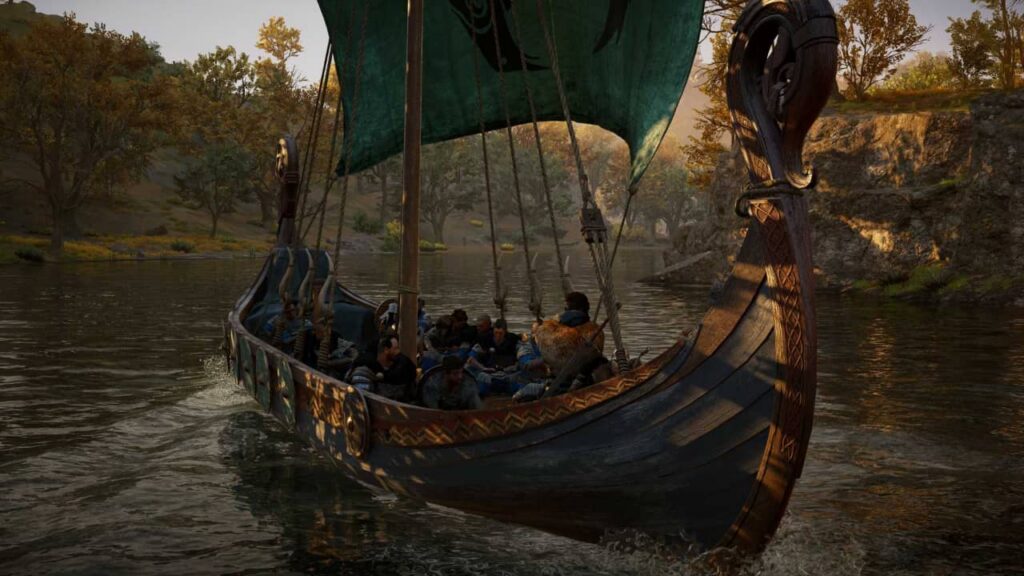
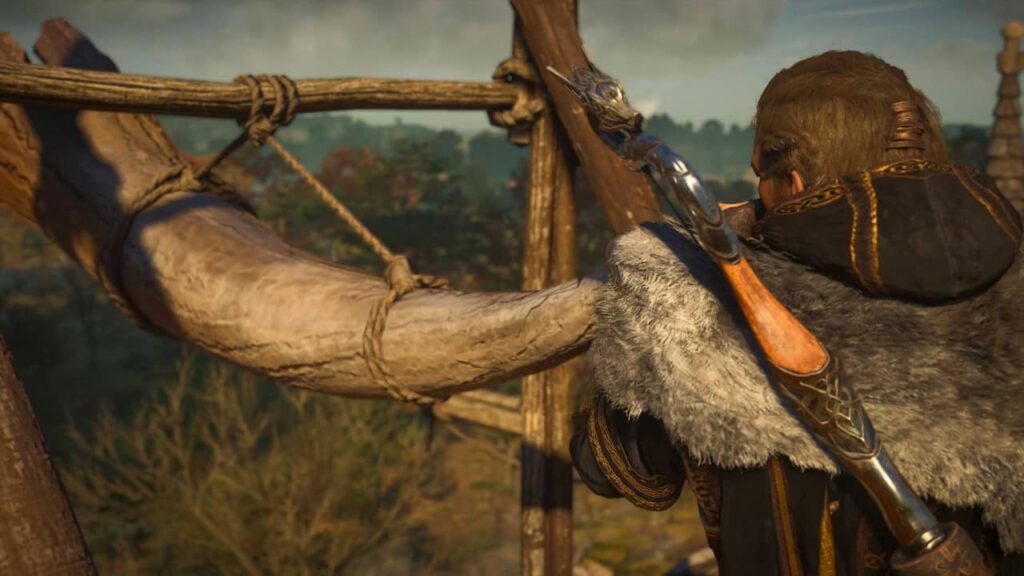
Shifting from the story to the gameplay, the assassin element remains, but a new mechanic is introduced in raids. Either command a crew in your longship and raid from the water’s edge, or sneak into an abbey or similar and blow your horn to call them in.
Raids source materials to develop your settlement; building all manner of buildings that improve your stats but allow for levelling up equipment, getting haircuts and tattoos and customising your horse and raven, Synin.
Expanding your base is a steady process, but I binged on it to level up Eivor. Assassin’s Creed: Valhalla is initially quite stingy on XP, and I found the best way to level up, or improve your ‘power’, was to uncover mysteries in the game.
These are little skits that play on historical characters and events that usually take a few minutes to do, but they’re quite generous in XP. When levelling up, you can expand on a vast skill tree that focuses on melee builds, ranged attacks and stealth tactics.
It takes an age to raise your power, but you can select various perks that increase your stats or add passive abilities or similar, such as stomping on an enemy to slow down time with an evasive technique. Your power level also determines the challenges in the game, and each area has a recommended level.
Though you can attempt an area when underlevelled, it’s not advised, unless you’re looking to secure all the viewpoints to uncover the map early and sneak in and out of an area where you can be killed with one hit.
Weaponry in Assassin’s Creed: Valhalla is a little more simplified, and I think that I prefer this method. Weapons are limited to the likes of daggers, spears, axes and swords that vary from one-hand to two-hand or even dual-wielded, where you can swap out an offhand weapon on the fly.
While the weapons are much more limited, you can upgrade their level, which changes their appearance and offers the option for a rune slot that allows for buffs such as poison attacks, increased evasion, etc. They can also have their stats increased through upgrades you can do on the fly, but the quality has to be completed by your blacksmith.
Ingots and materials needed for upgrades are massively restricted. To get to the top tier of armour and weaponry, mythical status, you have to find the right materials, limiting you to what you can upgrade. Fortunately, I was stuck with the default armour set throughout, as well as an early dagger.
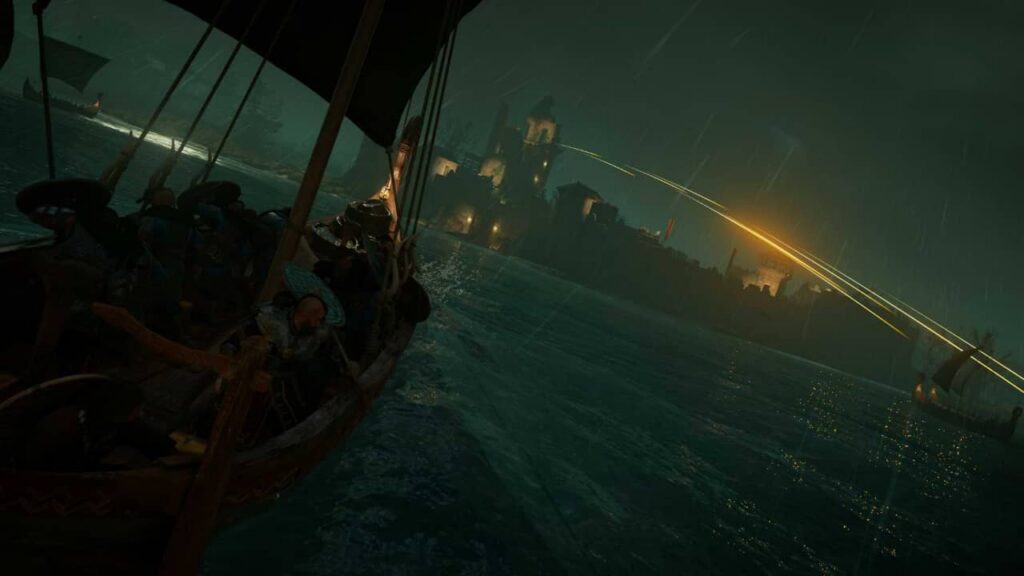
My build was the raven class, which focused on ranged stealth attacks, but when getting in close, playing like a rogue, dodging attacks, then backstabbing enemies at such a speed that I seldom would get a scratch.
You can’t regenerate health in Assassin’s Creed: Valhalla and instead, rely on berries and food left in villages. Once again, materials are pretty scarce at times, so it’s recommended to stock up (and level up your rationing potential) before going into battle.
One thing that plagues this series is the collision detection. I’m a fan of the Assassin’s Creed collection and have all the main titles. There are vast improvements in each game, and while no game is perfect, the number of times I had to fast-travel to a viewpoint because I was stuck in the scenery was ridiculous.
People bang on about Cyberpunk 2077, but as noted in my review, I never had any game-breaking experiences (since writing the review, I’ve seen the PS4 footage of the game and see why people are so enraged). With Assassin’s Creed: Valhalla, this was infuriating as I’d climb mountains to reach a viewpoint, only to get stuck on a flat surface, to then lose progress and return to somewhere ‘safe’.
This also happened in interior sections where I’d climb a wall instead of jumping through a window, jump off a surface when chasing an elusive note on a rooftop, to NPC characters setting off alarms when I’d perfectly execute a dozen or so guards without being seen.
For the most part, Assassin’s Creed: Valhalla is an excellent experience. England has never looked so good, and riding on horseback through my own county was a lot of fun, especially when I could say ‘been there’.
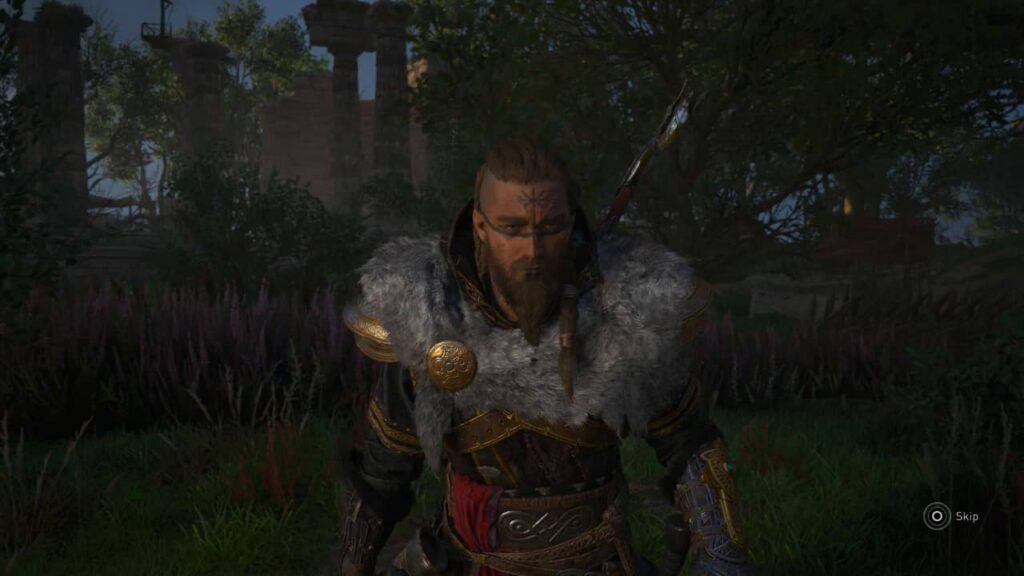
The Vikings resonate with a lot of people. For me, not so much. Norse Mythology, yes, but the brutality seemed quite senseless to me. Assassin’s Creed: Valhalla offers a lot of variety, and that mystical Assassins versus the Templars arc is a lot of fun, though the present-day scenes are like pulling teeth as always. Thankfully, these scenes are minimal, other than some parkour artefact collecting.
Raids are surprisingly fun, as are the sieges, but the stealth aspect has always been the selling point, and it’s as enjoyable as ever. The weapons system is an interesting one and works for the most part. I’ve seen a few complaints about the armour choices being a little boring, but they served their purpose, and the cosmetic application of face tattoos and braided hair was wicked.
There’s a lot more to cover, but enough has been said about Assassin’s Creed: Valhalla. It’s much of the same as before, only with a Viking theme and improved visuals. I didn’t notice a vast improvement over the PS4’s AC: Odyssey, but seeing rays of light shine through trees and the adaptive triggers adjusting the predator bows, gave it the edge without it being gimmicky. The main story is huge, but even when completing it, the endgame has a lot to offer with some mythical gear that will serve you well when you reach the halls of Valhalla.
Much of the same as the last two adventures, Assassin’s Creed: Valhalla is a must for fans of the series. Eivor is a pretty decent character that isn’t just a master of weapons and parkour, but has the gift of the gab with flyting and community development, regardless of whether you play as the male or female version.