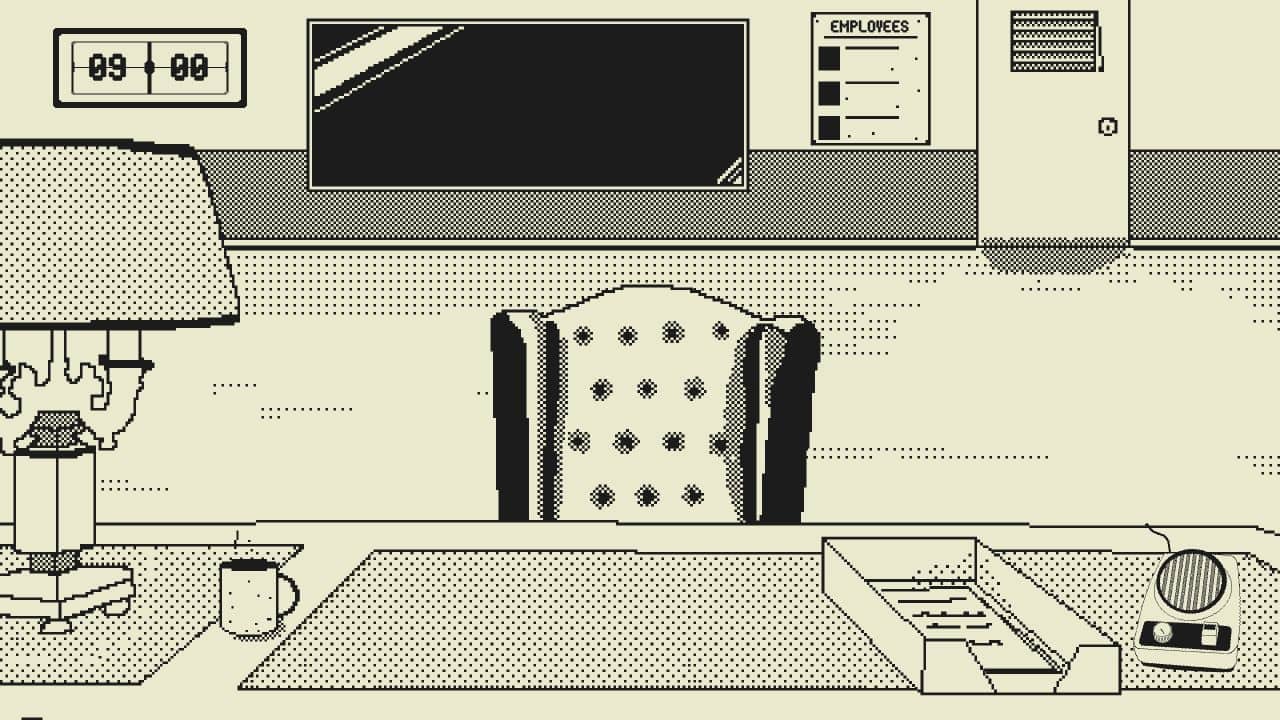
According to the herald’s Helmet, all news is bad news, so every once in a while, it’s good to have some Good News, and thanks to Augusto Salgado, here we have some: a playable demo now available on Steam. But hold the press: sure, free stuff is good, but your time is precious. Should you go and download the game and give it a go, or is it worth clearing out the garage, setting up your own newspaper press while completing your degree in Journalism through a correspondence course? Only you can decide. Here are some words on that.
Welcome to your new role as the editor for The Citizen. Your job as a senior within the paper is to review the articles the noobs are producing, correcting any mistakes, and then approving them so they can be published. This isn’t the age of Grammarly or built-in spell checks, as you have to do it the good ol’ fashioned way. More importantly, from the context of the game, you need to ensure the writer is factually correct and ensure that the paper doesn’t get any, ahem, bad press for spreading fake news.
Believe it or not, I used to be a paid writer back in the day, until AI effed that up. Anyway, I did proofreading, and it’s both hard and boring. Creating an article with no constraints is the way forward, and if I had it my way, I’d go fully gonzo on it, but any regular readers will know I typically self-censor. One thing is for certain, though: everything I write about is factual, the quotes, the figures, the observations. Good News implements cutting-edge ray tracing and ultra-realistic textures, and even better, your PA, Lucy, is drop-dead gorgeous.
None of the above is a fact, besides some of the writing bits. The game is a 1-bit monochrome thingy, and that’s what immediately drew me to the game before even reading the synopsis. Yes, we have cutting-edge GPUs, but I like my games to occasionally look like a Playdate on my ultrawide. Lucy does exist, but you’ll have to use your imagination. What’s more important is that you have a desk with articles to fact-check, and little did I know that the clock is ticking in real time, so you need to be somewhat swift. Like in real life.
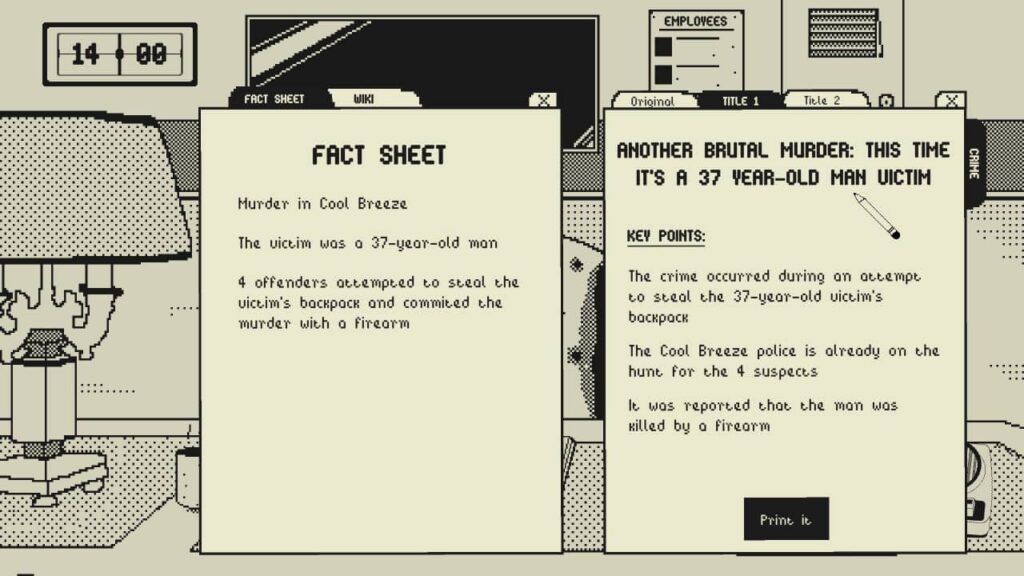
On the one hand you get the facts, with a dedicated Wiki, and on the other is a summary of the article, resembling bullet points. All you need to do in Good News is click the fact that’s off, and it will change to the desired choice. It’s surprisingly engaging, as having a keen eye for details is obviously important, but you have to do it quickly; the paper will be published as is. What’s the consequence? Less readership. It’s like me posting an article on this site saying all cats are dicks. As the internet loves everything cat-related, people will either exit the site or send me cat GIFs. Which I’d delete.
This understandably gets more and more challenging as the days pass, as you need to select an article which has the correct tone of voice for your audience. A survey is provided of a dozen or so pages, indicating what the majority would prefer to read. Paired with the Wiki pages, you are repeatedly fact-checking and seldom have much time to sip your coffee or scratch your nuts (or lady bits). Sure, that’s the premise of Good News, but it made it quite frustrating when the language wasn’t quite natural, meaning it didn’t always make sense, and the changes that you make are slowly animated. Click it by accident, and you’re waiting unnecessarily and watching the clock tick.
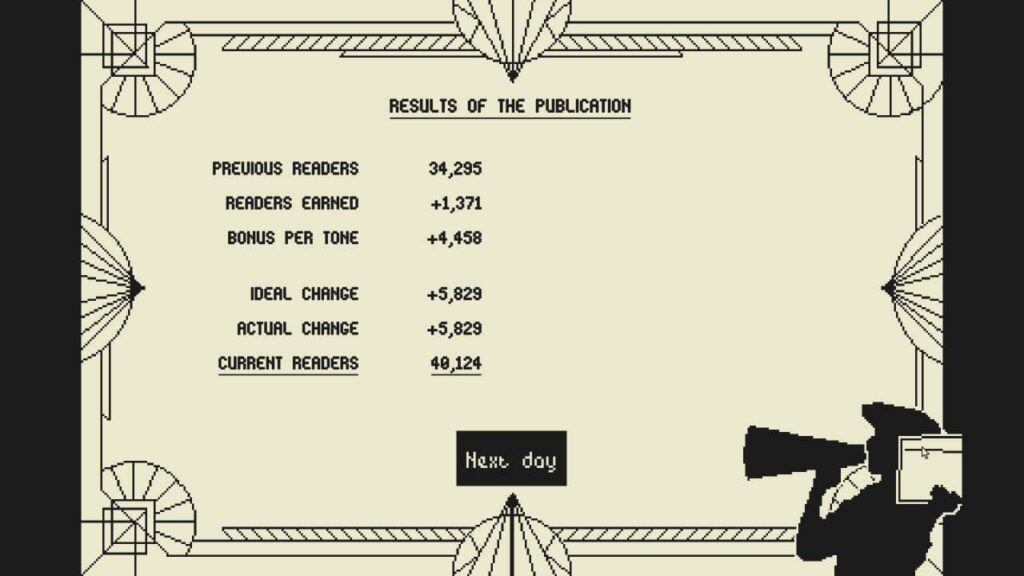
I like the idea. It’s a bit like the Papers, Please model, only without the gloom. The aesthetics, while simple, are pretty well-suited too. However, the fundamental language side of things bamboozled me a little, as did the timing with word animations and my thought process. It’s not quite the real thing, but it does instil a bit of squeaky bum moments. Have a look for yourself as the demo is currently up.