Project Songbird? More like Perfect Songbird. AmIright? Wait – you probably have no idea, as this review is coming out a little earlier than the release date, and for that reason, there’s only so much that can be shared as part of the rules, but also as it would spoil it for you. Despite that disclaimer, there will be two spoilers here.
The first spoiler, that does not affect the game but hampers the chances you’ll finish reading this, is that this ‘game’ is superb and wholeheartedly gets a recommendation before floundering through all the other superlatives (and criticisms) I’ll be making. The title ‘Cinematic Masterpiece?’ isn’t used lightly. Project Songbird is next level and ticks the boxes for the criteria under presentation. Let us begin with the premise, however.
You play Dakota. A reasonably successful musician – that is, she gets paid for it – who is struggling with material for her next album. Judging by the looks of her apartment and its size, Dakota isn’t in the big leagues, though she does have an agent who is keen to get the best out of her. Unsure that her current demos are heading the right direction, he suggests a remote cabin in the forest, where he sometimes stays, assisting artists reach deep into their psyche and unleash the creativity without limitations. Dakota agrees to this, so off she goes.
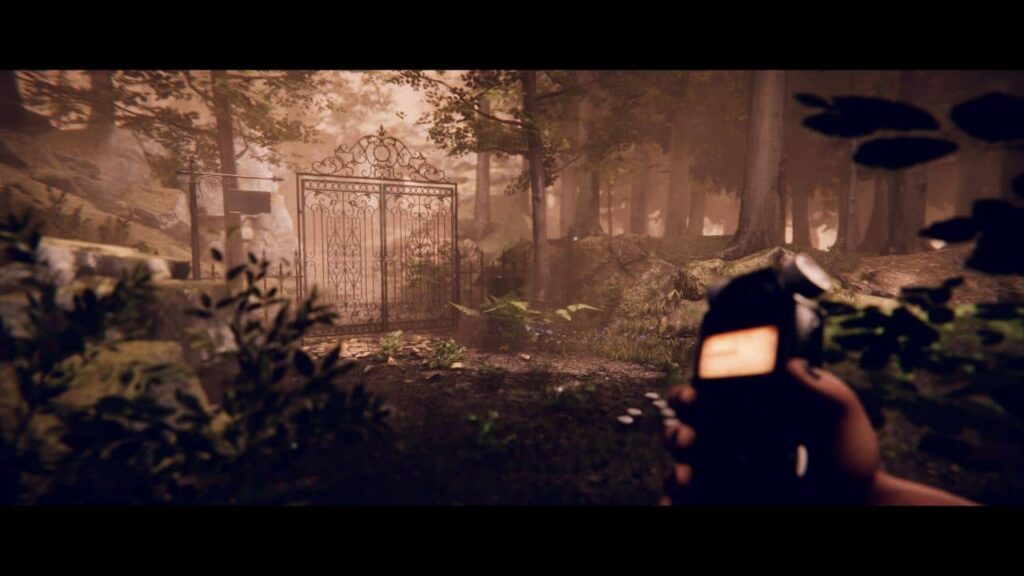
Project Songbird is a first-person experience that features quite possibly the best cinematic transitions I’ve seen in a game. This is elegant, and if it weren’t for some early niggles, which I’ll come to, it would be immensely immersive. As a film darling, I was in my element with the editing and narrative. Editing, you say? Yes – this plays like an interactive film, and no, not cheesy FMV with lifeless gameplay, but a next-level walking simulator. A few of you might be tuning out now, but bear with me.
As you might imagine, a game labelled psychological horror in which our protagonist heads out to an isolated cabin in the woods is paint-by-numbers. However, that is far from the truth. The storytelling devices are expert, the (snob alert) mise-en-scene is stellar, and even better, there’s a game to be had here! Initially, we learn that Dakota is running away from something, as alluded to from the start. Her objective is to make music, and at first, you get to choose from a selection of instruments and pre-arranged segments to make your own composition. It’s simple enough, but enjoyable if you don’t play an instrument. Dakota can even sample sounds like dripping water for wildlife, all with the intent to influence her craft. Then the forest starts to play tricks on her.
Cue some surreal, ethereal sequences, and Project Songbird raises the bar further. Dakota’s past mental stability is crucial to the story here, and new elements are introduced. The creator of the game, Conner Rush, states:
Much of the process for making this game involved just trying a bunch of weird ideas, and I think that, in the end, it all came together really well.
Well, if you don’t say so yourself. That said, he’s nailed it. There are lots of ideas, but they aren’t gimmicky or QTEs as filler. We have stealth, combat, puzzles, and a highly compelling story, which I can’t go any further with without fear of a spoiler. But… I have a very literal spoiler that won’t affect the narrative.
Project Songbird is acutely self-aware at times. The introduction to the game was a slog, going through one title scene after another, configuring the best settings, all the while, Conner is talking you through it and thanking you for playing their game. This beginning section was unnecessarily lengthy, but a one-off. Then, after returning for a second play, it happened again, and I was asked to rate the game – not on Steam, but within the game. This really spoiled it for me as it burst the bubble, smashed down the fourth wall, switched on the lights and said, “Here I am, this is me! HELLO!!”. This was very disappointing, as I’m not exaggerating, where I would say I was in a trance playing the game, as it’s utterly stunning. It’s like watching Goodfellas directed by Mel Brooks, and at a pivotal scene, the camera flips around to the director, and he waves at you with a wink.
The other two criticisms are save points. I often disregard playtime suggestions and would happily get lost in this game for as long as I want. Despite being an estimated four to six hours’ worth, there are no manual saves. As can be expected with puzzles and first-person wandering, there are times you aren’t sure what to do, and in that time spent figuring it out, you haven’t found a save point and have to repeat it again. The other criticism is about a difficulty spike with a particular enemy and music puzzle that was incredibly stress-inducing when you don’t play the keyboard and have a limited time to solve before… death.
But…
The enemy in question is one of the best I have ever experienced in a game. It was absolutely terrifying and extremely on edge when invading it. All I can allude to is musical statues and asthmatic assailants straight out of a Tool music video. Absolutely insane, and while difficult, incredibly memorable. This is where I will touch upon the presentation aspect, as it is a defining part of the Project Songbird. The reason for comparing it to a walking simulator was because of how outstanding the production is, though the biggest difference is that there’s no downtime here; no boring monologues or spinning 3D items on its axis. All dialogue is purposeful and meaningful, the puzzles are intelligent and bespoke, and while this is a survival horror, though it is more of a feature than direction, combat is satisfying and fair. Besides the earlier criticisms above, I have nothing else to add, such as it should be… I wish this were…
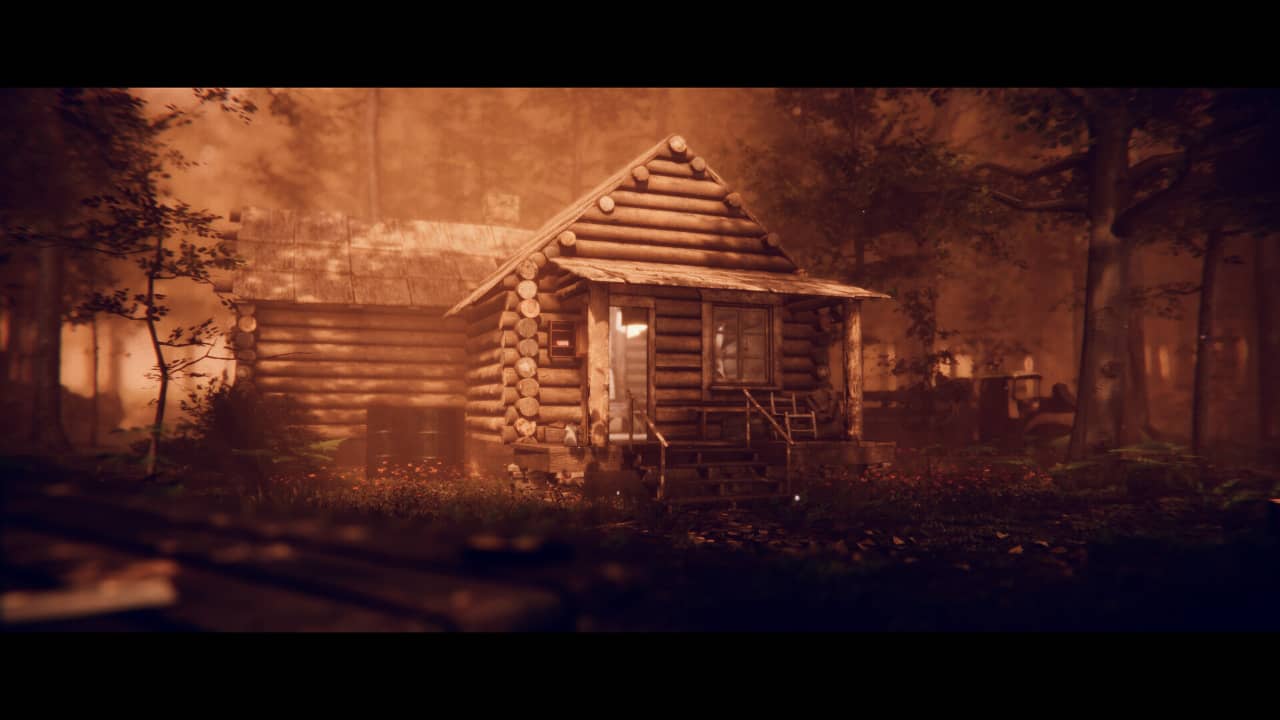
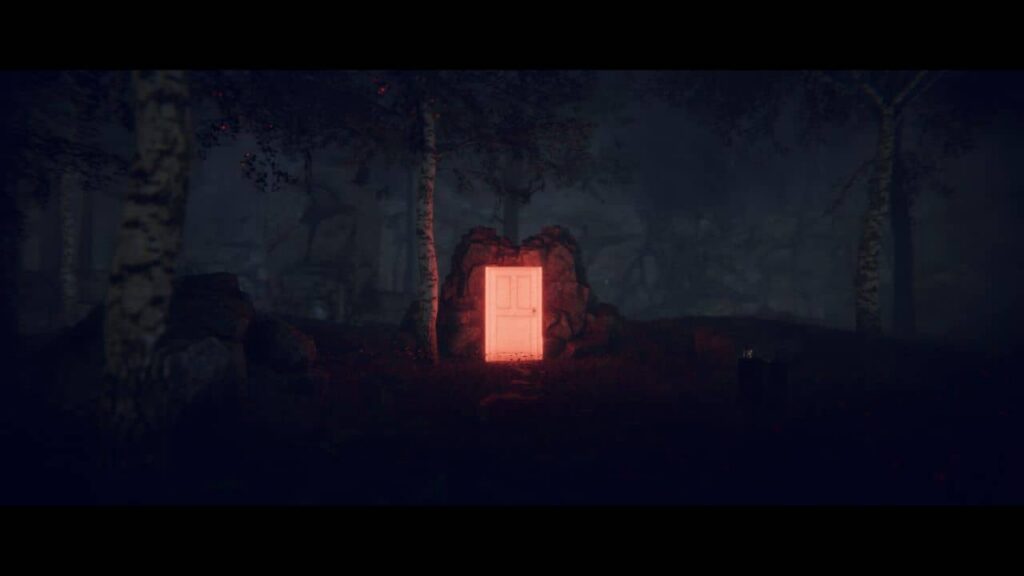
So, the presentation. Cinematically, Project Songbird is unbelievable. The lighting was ultimately the biggest takeaway for me as it nailed it in every scene, yet the textures and nuanced leaves blowing in the wind, and even the creatures, were superb. I’ve played a few games where the scenes are striking, but the enemies are mannequins or undermine the rest of the game. Not a single disappointment here. Besides the visuals, the sound production is also… perfect? The cast is amazing without one weak link, the score is wonderful, plus there are lots of tracks by real artists throughout that add to the atmosphere. And to top that, the ambience is genius. From the drones to snapping of twigs, or a recall ‘back to base’ with a gong, is simply next level.
It would be amusing if there was a disclaimer along the way saying this Project Songbird review was sponsored by Fyre Games, but that’s not the case. I simply love this experience, and not only is it a strong contender for GOTY (we’re currently in March!), but this is one of the most memorable games I’ve played. Sod it, let’s remove the question mark: Project Songbird is a cinematic masterpiece. Go download the demo and you’ll see what I mean.