
Well, I wasn’t expecting this. Hive Blight is an Early Access title from OptizOnion, which I interpreted as a turn-based strategy game with some tower defence/rogue-like aspects. Though that is somewhat true, emphasis is placed on this being an auto battler more than anything. That’s not the genre I would have defaulted to, preferring to keep things broad; however, I have to say that’s a fair summary of what to expect.
The purpose of the game is to fight off a fungal invasion. No, this is neither athlete’s foot nor rashes attacking one’s nether regions, and instead, mushroom types are invading the colony. You will select from some insect factions and tackle these intruders head-on to push back their attack and take out their elites and leaders in the process.
I was taken aback by Hive Blight’s gameplay due to how immediate it was. As is often the case with review titles, I tend to hover towards the Steam Deck, and while this plays absolutely fine from a technical perspective, the controls weren’t as intuitive without implementing some touchscreen support, and, thinking about it logically, we’re dealing with things like ants – artefacts are pretty small!
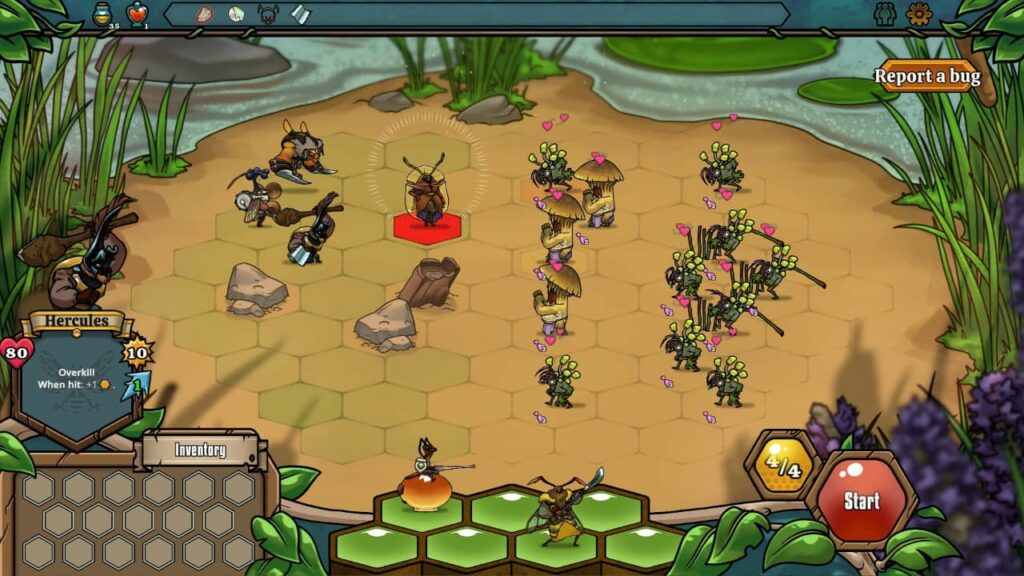
That said, the visuals are really cool, and the variety is surprising. The tutorial is brief and straightforward, allowing you to get started immediately. The learning curve, then, would be the strategy element. As can be anticipated, units are separated into specialities such as melee, ranged and support. There are no squads as such, and instead, you command individual warriors from different classes, joining you at random during a run.
Initial Hive Blight warriors will be tank-like beetle (modelled on actual insects – there are codex throughout and very informative!). These, naturally, go at the front of the attack; soaking up damage and holding the ranks while a bee archer attacks from the back. All the while this is going on, another bee will be healing, or a mosquito(?) will be jabbing and healing at the same time. As you might imagine, some units are significantly better than others, and though some can carry a battle, effective placement of units is essential to victory.
This is where the auto battler aspect kicks in. At the start of each skirmish, you have a limited number of units to place on the board. A highlighted area will indicate where, and you’re then able to focus on which enemy unit they will attack. As stated, placing ranged and supportive units further away is beneficial as they’re typically weak. Fortunately, these aren’t targeted until the frontline is out of the picture. However, once you place them, that’s it. The battle begins, and you’re more or less a spectator.
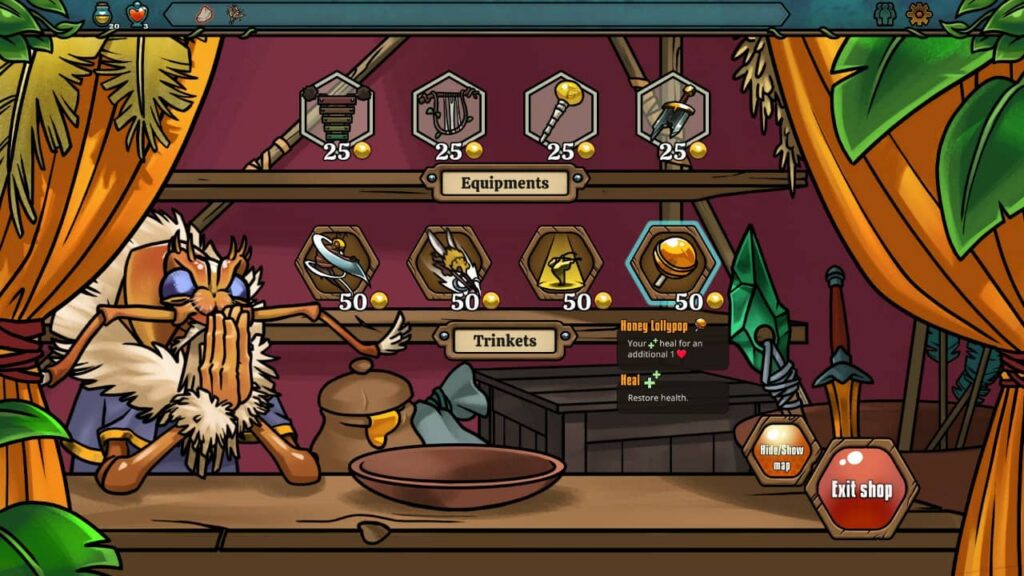
It might feel hit or miss at times, but I experimented with retries (you receive an olive branch of a retry, dipping into a vial that heals units at the end of each successful battle). With these retries, the units in the same position yielded the same outcomes. Shift them around and replace units? Completely changed it. An added bonus of limited retries is great, as are the additional scrolls you can use in battle, or equipment that buffs/debuffs as you go along.
What stood out the most for Hive Blight, and bearing in mind that this is a strategy game, is the variety of units and their skills. It initially feels mildly overwhelming, but after a few runs, you soon have your favourites that will turn the tide, and as they’re random per run, you start developing key strategies to survive until you can earn them, upgrade them, then thwart through fungal fools. And if you’re asking me, as you’re reading this, adopting strategies is crucial for a thinking game. Aside from checking the floor periodically for creepy crawlies, I was immersed throughout.