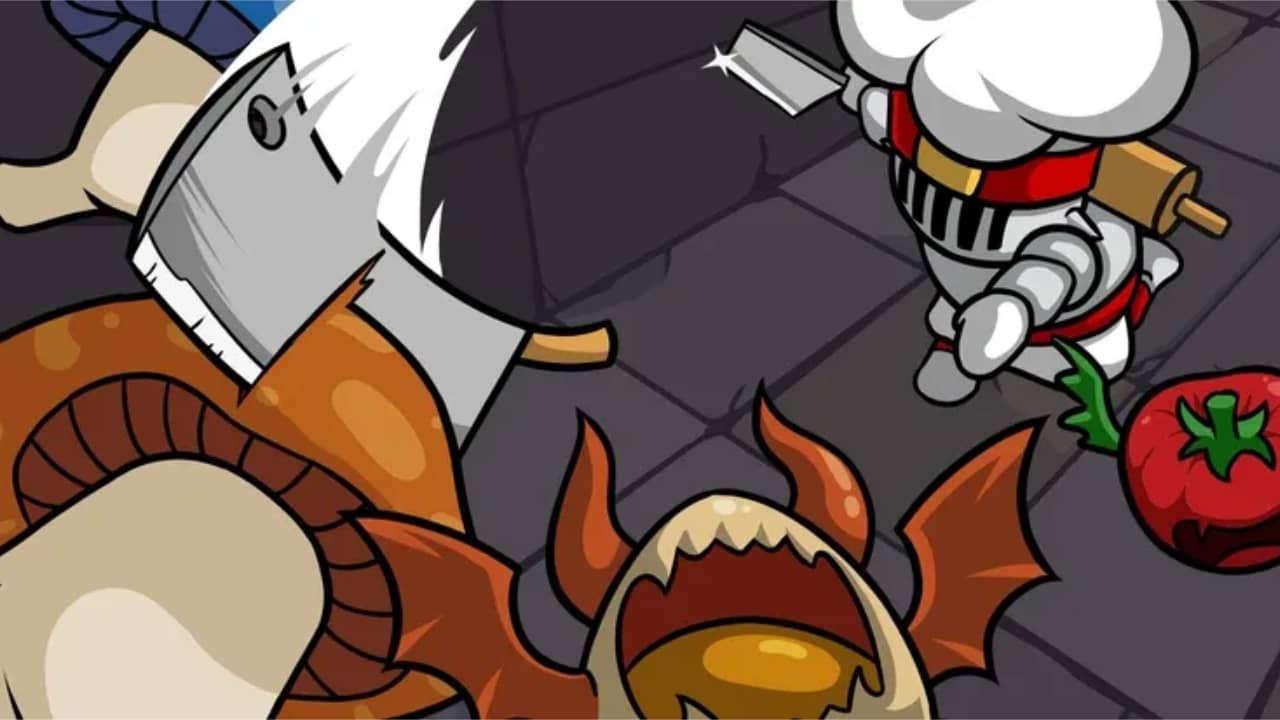
Addiction is a disease, disorder, and quite often, a dick that infringes on valuable time. How many clickers or rogue-likes have you played this year that sucked you up into their universe of repetition and made you lose those last few followers on social media? I don’t do social media, so there’s no loss for me, just the amount of time I’ve spent on Chef Knight, from Clover Bite, though I don’t want that time back – I’ve enjoyed every minute of this rogue-like.
After a sketchy (figuratively and literally) introduction, I head straight into the kitchen to find an infinite line of goblins expecting me to serve them some grub. Without anything in the pantry, I have to head into the dungeon to slaughter some mushrooms. Thing is, the buggers are quite hardy, and there’s hardly any time to scavenge enough for a dish. Still, I persevere.
Heading back to the kitchen, I throw a handful of mushrooms into a pot, wait for a bit, then serve them to the horde via my ramen-like cart. Ooh – that made a bit of money, what do I do with it – invest in better utensils or gear? What do I do? That’s where the addiction bit kicks in for Chef Knight: the skill tree.
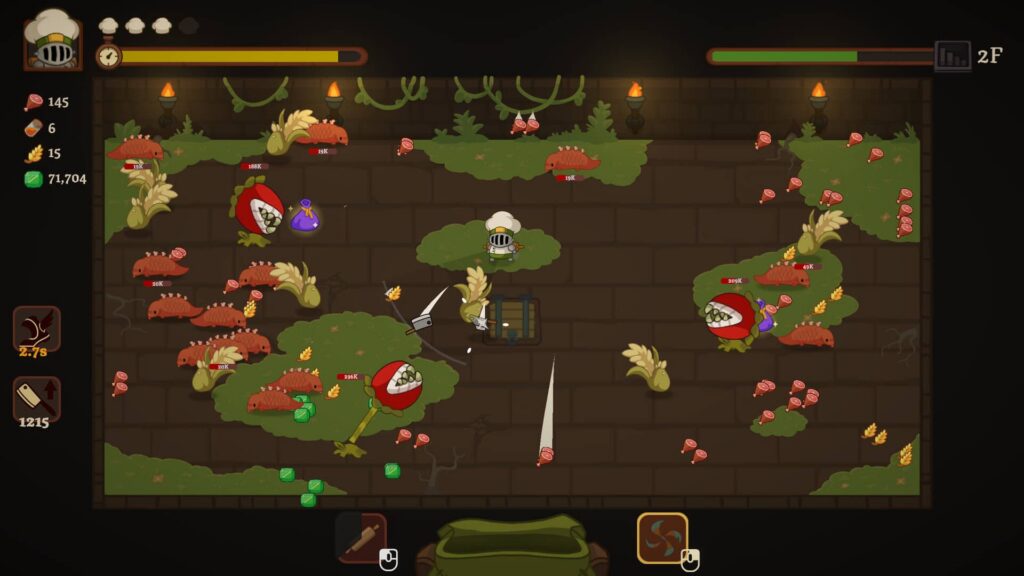
I don’t think I’ve seen such an expansive skill tree that was totally upgradeable within a fair pace of time. Here you can invest in the strength of your attack, the speed, how quickly you cook your recipes, how much they sell for and increasing the number of enemies to increase your chances of earning more food. As the game progresses, you can invest in lightning chains, seasoning to add more value to dishes, a spinning spatula for immediate crowd control, and an oversized rolling pin that bounces off the walls to take out swarms.
That’s a great deal of progression in Chef Knight, and an equal amount of investment, as you will be doing the same thing over the four biomes. You will attempt runs of a dungeon and use the money to improve your attacks, then predominantly the time awarded in a dungeon. There are three stages to each, and when you meet the quota, you will jump to the next level, with a large chest that needs to be destroyed to ‘defeat’ the area. In addition to the fundamental level progression, there are numerous challenges.
These challenges might be to kill so many enemies, make x number of dishes, or collect gems. Gems are awarded through destroying chests and help unlock better tiers with the skill progression. No path is locked to one area, as you can unlock everything in the game, and each upgrade makes a difference. However, even though overpowered in one dungeon, in the next, you will have to restart. Your earnings go from hundreds to quadrillions. So, that’s where we have the clicker aspect of the game with the ludicrous counters.
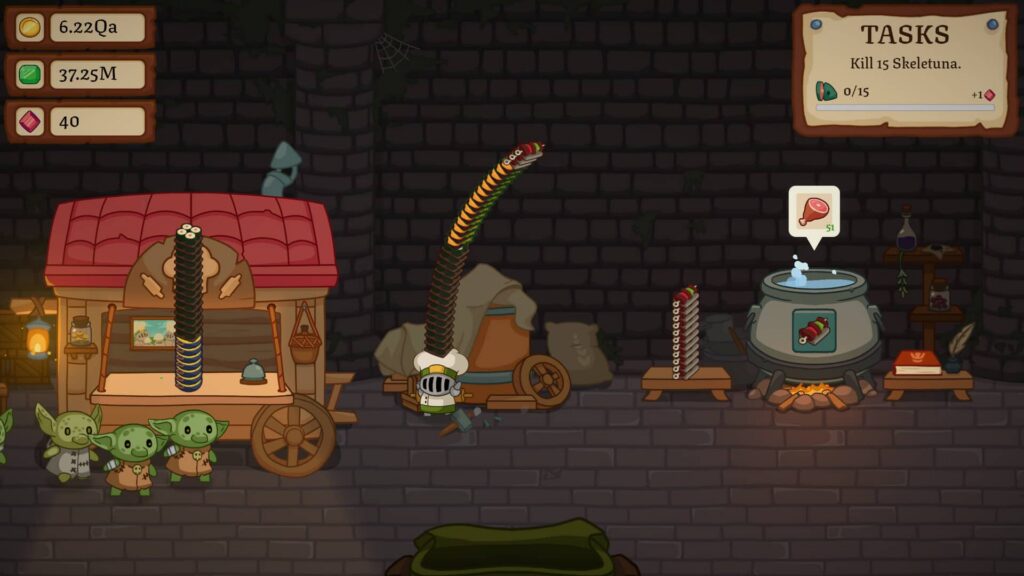
While Chef Knight doesn’t take any damage from enemies, environmental hazards are introduced in different biomes, though they don’t present much of a problem. The biggest problem, if anything, is the insane slowdown in the last stages. I believe I was running at 2 FPS at that point, but, based on the time I’d invested thus far, it wasn’t an issue. I really enjoyed my time with Chef Knight. Would I play it again? No. The reason is the same as why I don’t (try) replay Fallout Shelter – both excellent games, but you can’t just have ‘a quick go’ and will have to see it through from start to finish. Which isn’t such a bad thing. If you have the time.